Modern manufacturing is undergoing a structural transformation driven by precision engineering, digital automation, and advanced material processing techniques. Industries are no longer satisfied with conventional joining methods that produce inconsistent results or require extensive post-processing. Instead, the focus has shifted toward technologies that can deliver accuracy, speed, and repeatability within tightly controlled production environments.
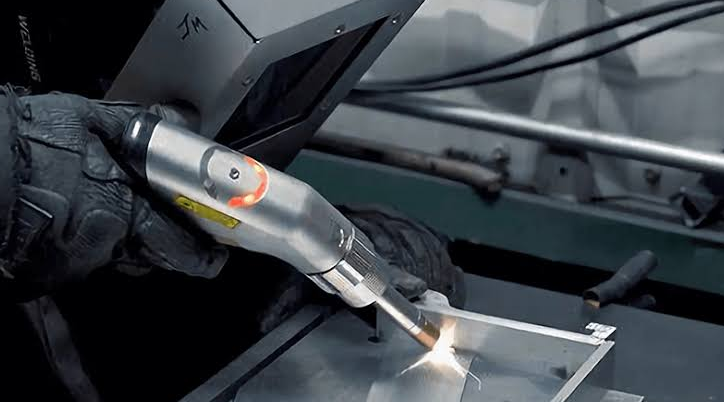
Laser welding has emerged as one of the most important innovations in this evolution. By using a concentrated beam of light energy, it enables materials to fuse together with minimal thermal distortion and exceptional joint strength. This method is now widely used in high-performance sectors such as automotive engineering, aerospace fabrication, electronics production, and medical device manufacturing.
At the center of this technological shift is the role of a laser welding machine manufacturer, which is responsible for designing and producing the systems that make this advanced level of manufacturing possible. Their contribution goes far beyond machine assembly, as they directly influence production efficiency, engineering reliability, and industrial scalability.
The Shift Toward Ultra-Precision Manufacturing
Global manufacturing has moved away from general production methods toward ultra-precision systems that demand strict control over every stage of fabrication. Products today are more compact, more complex, and more sensitive to structural inconsistencies than ever before.
Traditional welding techniques often struggle to meet these demands due to uncontrolled heat spread, mechanical stress, and limited repeatability. These challenges can affect product performance and increase defect rates in high-volume production environments.
Laser welding solves these issues by delivering highly focused energy that allows controlled material fusion. This ensures cleaner joints, reduced deformation, and improved structural consistency across production cycles.
As industries continue to raise quality standards, precision-based welding systems are becoming a fundamental requirement rather than an optional upgrade.
See also: Clever Trivia Questions for Social Gatherings
Engineering Depth Behind Laser Welding Systems
A laser welding system represents a highly advanced combination of optical engineering, thermal management, electronic control, and mechanical precision. Every component must function in perfect synchronization to maintain stability during continuous operation.
A laser welding machine manufacturer must therefore possess expertise in multiple engineering disciplines, including laser physics, heat transfer analysis, motion control systems, and industrial automation integration.
The design process involves ensuring beam stability, energy consistency, cooling efficiency, and operational safety. Even minor variations in system configuration can significantly affect welding quality and machine performance over time.
This makes manufacturing expertise a defining factor in the reliability and efficiency of the final system.
Precision as the Foundation of Industrial Success
In modern industrial environments, precision is not just a technical requirement but a competitive advantage. Even microscopic variations in welding accuracy can impact product durability, functionality, and safety.
Laser welding technology enables manufacturers to achieve extremely fine control over penetration depth, heat distribution, and joint formation. This level of precision ensures uniform results even in large-scale production environments.
Industries such as electronics, aerospace, and medical device manufacturing rely heavily on this consistency to maintain strict quality standards.
As products continue to become more advanced, precision in manufacturing processes becomes increasingly critical.
Efficiency and Production Optimization Benefits
Efficiency is one of the strongest advantages offered by laser welding systems. Traditional welding processes often require additional finishing operations due to imperfections, uneven surfaces, or thermal distortion.
Laser welding significantly reduces or eliminates many of these secondary processes by producing high-quality welds directly during fabrication. This leads to faster production cycles and improved operational efficiency.
Additionally, laser systems are capable of operating at high speeds without compromising accuracy, making them suitable for both high-volume production and precision-based manufacturing.
These advantages contribute to reduced operational costs and improved overall productivity.
Integration With Automated Industrial Systems
Manufacturing is rapidly evolving toward automation-driven production environments where machines operate with minimal human intervention. Smart factories rely on interconnected systems that communicate and adapt in real time.
Laser welding technology integrates effectively into this environment due to its compatibility with robotic systems, CNC platforms, and digital control architectures.
A forward-thinking laser welding machine manufacturer designs systems that support automation integration, real-time monitoring, and programmable process control.
This allows manufacturers to optimize workflows, improve production consistency, and reduce dependency on manual operations.
Material Flexibility Across Industrial Applications
Laser welding systems are highly versatile and can be used across a wide range of materials, including stainless steel, aluminum, titanium, copper, and specialized industrial alloys.
This flexibility makes them suitable for diverse industries such as automotive assembly, aerospace construction, battery manufacturing, electronics production, and precision tooling.
Each application requires specific welding parameters, including beam intensity, focus control, and travel speed. Manufacturers must ensure that systems can be adjusted to meet these varying requirements without compromising performance.
This adaptability is essential for supporting modern multi-industry manufacturing environments.
Reliability and Continuous Operation Stability
Industrial production systems must operate continuously under demanding conditions without interruption. Any downtime can result in financial losses and production delays.
Laser welding machines are engineered with advanced thermal regulation systems, durable optical components, and reinforced mechanical structures to ensure stable long-term performance.
A reliable laser welding machine manufacturer prioritizes system durability and operational consistency to minimize maintenance requirements and maximize uptime.
This reliability is a key factor in industrial adoption of laser welding technology.
The Future Direction of Laser Welding Technology
The future of laser welding is closely connected to advancements in intelligent manufacturing, artificial intelligence, and real-time data processing systems.
Emerging technologies are expected to introduce adaptive beam control, predictive maintenance systems, and automated quality inspection capabilities.
These innovations will further enhance precision while reducing human involvement in production processes.
Manufacturers who continue investing in technological advancement will play a central role in shaping the next generation of industrial fabrication systems.
Conclusion
Laser welding technology has become a critical element in modern manufacturing due to its ability to deliver unmatched precision, efficiency, and operational consistency. It has transformed traditional fabrication methods and opened new possibilities for advanced industrial applications.
However, the true effectiveness of this technology depends heavily on the engineering expertise behind its development.
A laser welding machine manufacturer is not simply a supplier of equipment but a core contributor to industrial performance and innovation. Their role in designing, optimizing, and supporting advanced welding systems directly influences production quality and operational success.
As manufacturing continues evolving toward smarter, more automated, and highly precise systems, the importance of advanced laser welding manufacturers will continue to grow as a driving force behind global industrial progress.