Industrial manufacturing is entering a new era where automation, digital technology, and intelligent production systems are redefining how products are designed and created. Modern factories are no longer focused only on increasing output. They are also working toward improving precision, reducing waste, optimizing resources, and creating production environments that can quickly adapt to changing market requirements. Within this transformation, the fiber laser welder has become an important technology that is supporting the future of industrial joining and helping manufacturers move toward smarter manufacturing processes.
Joining technologies have always played a critical role in industrial development. From automotive components and aerospace structures to electronic devices and heavy machinery, reliable joining methods determine the strength, durability, and performance of finished products. As industries adopt more advanced materials and complex designs, traditional approaches are being complemented by technologies that provide better control and improved manufacturing flexibility.
The movement toward smart manufacturing is not only about automation. It is about creating connected production systems where equipment, data, and engineering decisions work together to achieve higher levels of efficiency and quality.
Smart Manufacturing Is Changing Industrial Requirements
Manufacturing requirements have changed significantly in recent years.
Businesses now operate in highly competitive environments where customers expect better products, faster delivery, and consistent quality. At the same time, manufacturers must control costs and improve production efficiency.
These challenges require technologies that can provide reliable performance while adapting to different production situations.
Smart manufacturing focuses on creating flexible systems that allow businesses to respond quickly without compromising product standards.
See also: Smart Technologies That Are Improving Industrial Electrical Systems
The Evolution of Industrial Joining Technologies
Joining processes have developed alongside industrial innovation.
Traditional welding methods have supported manufacturing for generations, but modern industries require greater precision, reduced material impact, and improved repeatability.
Advanced joining technologies are helping manufacturers overcome challenges related to complex designs, specialized materials, and high-quality production requirements.
This evolution represents a shift from basic joining techniques toward intelligent manufacturing solutions.
Precision Is the Foundation of Smart Production
Accuracy is essential in modern industrial applications.
Manufacturers working in automotive, aerospace, electronics, and medical industries require joining processes that produce consistent results throughout every production cycle.
Greater precision improves product reliability while reducing errors that can affect performance and increase production costs.
Smart manufacturing depends on technologies that can maintain accuracy while supporting efficient and scalable production.
Integration With Automated Manufacturing Systems
Automation is one of the key elements of smart factories.
Modern production facilities use robotics, digital monitoring systems, and connected equipment to improve workflow coordination and operational control.
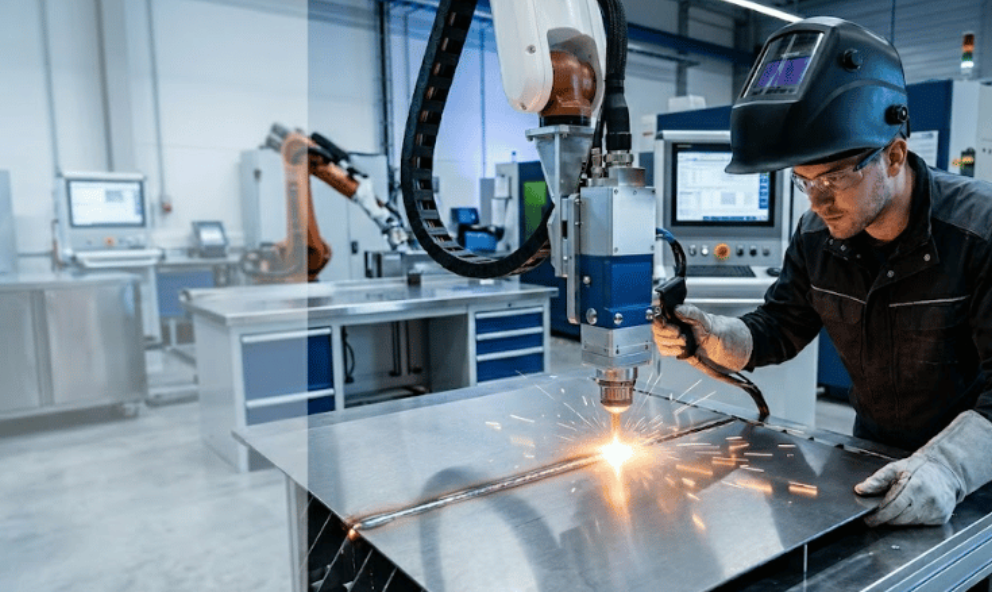
Advanced joining technologies can become part of these automated environments, allowing manufacturers to create more organized and efficient production lines.
Integration between different systems helps reduce manual intervention while improving production consistency.
The Importance of Real-Time Production Data
Data has become one of the most valuable resources in modern manufacturing.
Smart factories collect information from production equipment to understand performance, identify issues, and improve operational decisions.
Real-time data allows manufacturers to monitor processes more effectively and make adjustments when necessary.
This information-driven approach supports continuous improvement and helps businesses maintain higher production standards.
Improving Efficiency Through Intelligent Processes
Efficiency is no longer measured only by production speed.
Modern manufacturers consider factors such as resource usage, maintenance requirements, product quality, and workflow optimization.
Intelligent production technologies help businesses achieve better results by improving coordination between different manufacturing stages.
Efficient processes reduce unnecessary delays while supporting stronger long-term operational performance.
Supporting Advanced Material Applications
Industrial materials continue becoming more advanced.
Lightweight alloys, specialized metals, and complex material combinations are increasingly used across different industries to improve product performance.
These materials often require precise joining methods that can maintain strength while protecting material properties.
Advanced joining technologies support these applications by providing greater control during the manufacturing process.
Sustainability in Future Manufacturing
Sustainability is becoming a major focus within industrial development.
Manufacturers are searching for ways to reduce waste, improve energy efficiency, and optimize production resources.
More precise joining processes contribute to sustainability by reducing material losses and improving overall manufacturing efficiency.
Future smart factories will continue combining productivity improvements with environmentally responsible practices.
Preparing for Industry 4.0
Industry 4.0 represents the next stage of industrial development.
It combines automation, artificial intelligence, digital connectivity, and advanced manufacturing technologies to create more intelligent production environments.
Joining technologies will continue playing an important role within this transformation because they directly influence product quality and manufacturing reliability.
Companies adopting Industry 4.0 principles are preparing themselves for a more connected and efficient industrial future.
The Role of Innovation in Future Growth
Continuous innovation remains essential for manufacturing progress.
Engineering teams continue developing new methods to improve production accuracy, system integration, and operational efficiency.
Businesses that invest in innovative technologies are better prepared to respond to changing industry requirements and customer expectations.
Future manufacturing success will depend on the ability to combine technological advancement with practical industrial applications.
Building Future-Ready Manufacturing Operations
The factories of tomorrow will require flexible, intelligent, and highly efficient production systems.
Manufacturers must consider not only current production needs but also future opportunities for expansion and technological advancement.
Investing in advanced joining solutions helps businesses create stronger foundations for long-term growth.
Future-ready operations will focus on adaptability, automation, and continuous improvement.
Final Thoughts
Smart manufacturing is transforming the industrial landscape by introducing more connected, efficient, and intelligent production methods. As industries continue developing advanced products and adopting new materials, reliable joining technologies will remain essential for maintaining quality and performance. The future of industrial manufacturing depends on solutions that combine precision, automation, and adaptability.The growing importance of the fiber laser welder reflects the broader movement toward smarter production environments. By supporting accurate joining, automated workflows, real-time monitoring, and efficient manufacturing processes, this technology is helping industries prepare for the next generation of smart manufacturing and industrial innovation.