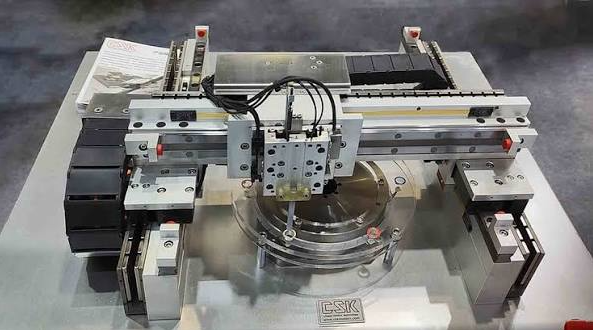
When people think about industrial productivity, they often focus on the visible aspects of manufacturing. They think about robotic arms moving at high speed, automated assembly lines producing thousands of components, or sophisticated machines operating with remarkable accuracy. What many fail to notice is that the success of these systems often depends on decisions made months before production ever starts.
One of those decisions involves selecting the right linear motors supplier. While this may appear to be a technical procurement choice, it has a direct impact on machine design, production capabilities, maintenance requirements, and long-term operational efficiency.
As manufacturing becomes increasingly automated, motion systems are no longer secondary components hidden inside machinery. They are becoming the foundation upon which modern industrial equipment is built. The quality of movement determines how accurately products are manufactured, how efficiently machines operate, and how reliably production targets are achieved.
In many cases, the supplier chosen during the planning stage influences the future success of an entire automation project.
The Evolution of Manufacturing Expectations
Manufacturing expectations have changed dramatically over the last two decades. Businesses are expected to produce more products in less time while maintaining strict quality standards.
Customers demand consistency. Supply chains require reliability. Global competition pushes manufacturers to improve performance continuously.
Traditional production methods are often unable to meet these expectations without significant technological improvements. This has accelerated the adoption of advanced automation systems designed to maximize efficiency and minimize waste.
Motion control technology sits at the center of this transformation because every automated process ultimately depends on movement.
See also: Amity Project for MBA and BBA Students: The Business Research Roadmap
Why Motion Quality Determines System Quality
A machine can only perform as well as its ability to move accurately. Every production process involves positioning, transporting, aligning, or manipulating materials and components.
If movement lacks precision, product quality suffers. If motion is inconsistent, production efficiency declines. If mechanical systems introduce delays or inaccuracies, operational costs increase.
Linear motors provide direct motion that eliminates many of the variables associated with traditional transmission systems. Their ability to deliver smooth and highly controlled movement makes them particularly valuable in environments where precision is critical.
As manufacturers pursue higher quality standards, motion quality becomes increasingly important.
Building Machines Around Performance Instead of Limitations
For many years, machine designers were forced to work around the limitations of conventional mechanical systems. Engineers often had to accept compromises involving speed, accuracy, or maintenance requirements.
Modern direct-drive technologies have changed this approach.
Instead of designing equipment around mechanical restrictions, engineers can focus on achieving performance objectives. This shift allows manufacturers to create machines that operate faster, position more accurately, and respond more dynamically to changing production requirements.
The result is a new generation of industrial equipment capable of delivering higher levels of productivity and flexibility.
Why Precision Manufacturing Is Expanding Beyond Specialized Industries
Precision manufacturing was once associated primarily with aerospace, medical technology, and semiconductor production. Today, precision has become important across a much wider range of industries.
Packaging systems require accurate product placement. Electronics manufacturers depend on exact positioning. Automotive production relies on repeatable assembly processes.
Consumers expect higher-quality products regardless of industry, and manufacturers must meet these expectations while maintaining profitability.
Linear motor technology helps support this trend by enabling highly repeatable movement across a variety of applications.
The Growing Importance of Dynamic Production Systems
Modern factories must adapt quickly to changing market conditions. Product designs evolve more rapidly than ever before, and production systems must be capable of supporting these changes without extensive reconfiguration.
Flexibility has become a competitive advantage.
Motion systems that provide programmable movement allow manufacturers to adjust production parameters without major mechanical modifications. This capability improves responsiveness and reduces downtime during transitions.
Businesses that invest in adaptable technologies are often better positioned to respond to future opportunities.
Reducing Mechanical Complexity
Complexity often creates inefficiency. Traditional motion systems require numerous components working together to generate movement.
Each additional component introduces potential wear, maintenance requirements, and opportunities for failure.
Linear motors simplify machine architecture by eliminating many intermediary mechanisms. This reduction in complexity often improves reliability while reducing maintenance demands.
Simpler systems are generally easier to manage, troubleshoot, and optimize over time.
For manufacturers seeking long-term operational stability, this advantage can be significant.
Supporting High-Speed Industrial Processes
Speed remains a critical factor in manufacturing productivity. However, increasing speed without maintaining accuracy can create quality problems.
The challenge is finding technologies capable of delivering both.
Linear motors excel in this area because they can accelerate rapidly while maintaining precise control throughout the motion cycle. This combination allows manufacturers to increase throughput without sacrificing consistency.
Industries that rely on high-speed production often view advanced motion systems as essential tools for achieving performance goals.
The Relationship Between Automation and Competitive Growth
Automation is no longer simply a way to reduce labor requirements. It has become a strategic tool for improving quality, increasing efficiency, and supporting business growth.
Companies investing in automation often gain advantages in production capacity, product consistency, and operational flexibility.
Motion technology plays a vital role in enabling these benefits. Without accurate and reliable movement, automation systems cannot achieve their full potential.
As competition intensifies across global markets, manufacturers increasingly view advanced motion control as an investment in future competitiveness.
Why Supplier Knowledge Creates Value
Technology alone does not guarantee success. Effective implementation requires experience, expertise, and application knowledge.
A trusted linear motors supplier helps organizations navigate technical challenges and make informed decisions throughout the project lifecycle.
This support can include system selection, engineering consultation, performance optimization, and long-term technical assistance.
Manufacturers benefit from access to specialized knowledge that helps maximize the value of their automation investments.
Strong supplier relationships often contribute to smoother project execution and better overall results.
Looking Ahead to the Next Generation of Manufacturing
Industrial technology continues evolving at a remarkable pace. Smart factories, artificial intelligence, predictive maintenance, and connected production systems are transforming how products are manufactured.
Motion technology will remain a critical component of this evolution because movement is fundamental to every automated process.
Linear motors provide the speed, accuracy, responsiveness, and reliability required by modern manufacturing environments. Their role is expected to grow as industries continue pursuing higher levels of automation and efficiency.
Organizations that embrace advanced motion solutions today are positioning themselves to benefit from tomorrow’s technological advancements.
Conclusion
The success of modern manufacturing depends on far more than machinery alone. It depends on the technologies, partnerships, and strategic decisions that shape machine performance from the very beginning.
Selecting the right linear motors supplier is one of those decisions. It influences everything from system design and production efficiency to reliability and future scalability.
As industries continue moving toward smarter and more precise manufacturing methods, businesses that prioritize advanced motion technology will gain important advantages in performance, flexibility, and competitiveness.
In an increasingly automated world, the quality of movement often determines the quality of results. That reality makes motion technology one of the most influential forces shaping the future of industrial innovation.