Creating safe and accessible transportation systems is one of the biggest challenges for modern cities. Roads and intersections are designed to support millions of people every day, but not every individual experiences these environments in the same way. For visually impaired pedestrians, crossing busy roads can be a difficult and potentially dangerous task because traditional visual signals may not provide enough information. To address this challenge, cities are increasingly adopting technologies that improve accessibility and independence. Among these solutions, the audible pedestrian crossing has become an important innovation that helps visually impaired communities navigate urban environments more safely.
Transportation accessibility is not only about creating physical pathways. It also involves ensuring that people with different abilities can interact with public infrastructure confidently. Sound-based crossing systems provide additional guidance by using audible signals that communicate when it is safe to cross, making road environments more inclusive.
As urban areas continue developing smarter infrastructure, technologies focused on accessibility are becoming essential for creating transportation systems that serve everyone equally.
The Importance of Accessible Road Infrastructure
Public roads should be designed for all members of society.
Every day, people with different mobility needs use streets, intersections, and pedestrian routes to access essential services such as workplaces, schools, healthcare facilities, and public spaces.
When infrastructure does not consider accessibility requirements, some individuals may face unnecessary barriers.
Inclusive transportation design helps create environments where everyone can move with greater confidence and independence.
Challenges Faced by Visually Impaired Pedestrians
Crossing roads can be challenging for people with limited or no vision.
Traditional pedestrian signals often rely heavily on visual indicators, which may not provide sufficient information for visually impaired users.
Without additional guidance, identifying the correct time to cross can become difficult, especially in busy areas with heavy traffic and multiple lanes.
Accessible technologies help reduce these challenges by providing alternative forms of communication.
See also: Smart Technologies That Are Improving Industrial Electrical Systems
How Sound-Based Crossing Systems Improve Safety
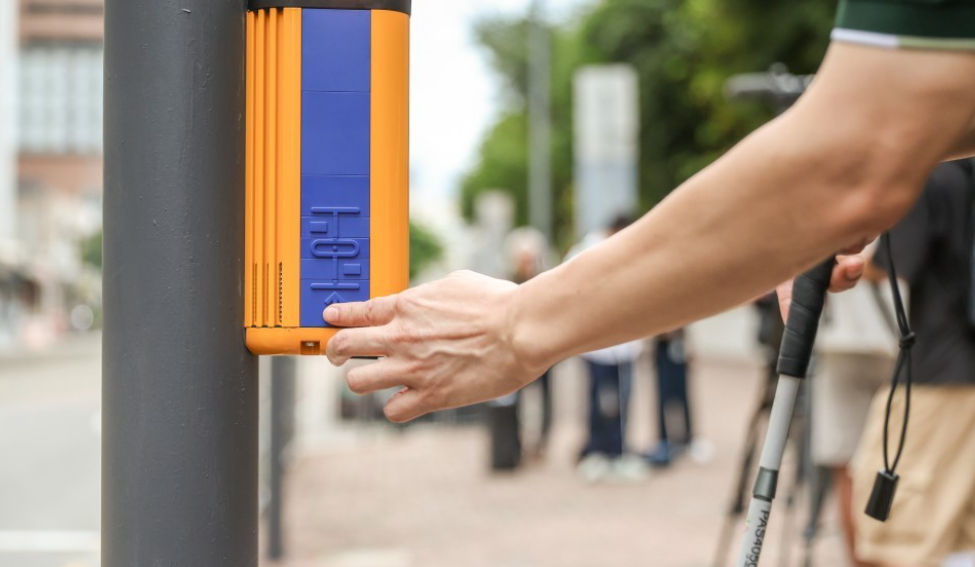
Audible crossing solutions use sound signals to provide important information to pedestrians.
These signals help users understand when a crossing phase has started and when it may be safer to move across the road.
By adding an audio element to traditional crossing systems, cities can improve communication between infrastructure and pedestrians.
This creates a safer experience for people who cannot rely on visual information alone.
Supporting Independent Mobility
Independence is an important part of quality of life.
Transportation systems that support independent movement allow visually impaired individuals to participate more fully in education, employment, and community activities.
Accessible crossing technologies help reduce dependence on assistance from others.
By improving confidence in public spaces, these systems contribute to greater personal freedom.
Making Urban Environments More Inclusive
Modern cities are focusing more on inclusive design.
Infrastructure should not only serve the majority of users but also consider the needs of people with different abilities.
Audible crossing technology represents an important step toward creating more welcoming urban environments.
When accessibility is included in city planning, public spaces become easier and safer for everyone.
The Connection Between Technology and Accessibility
Technology continues changing how cities solve mobility challenges.
Smart infrastructure solutions are helping transportation systems become more responsive and user-friendly.
Audible pedestrian systems are part of this wider movement toward intelligent and accessible urban development.
By combining technology with thoughtful design, cities can create transportation networks that better support diverse communities.
Improving Safety at Busy Intersections
Busy intersections can create additional challenges for visually impaired pedestrians.
Traffic noise, multiple vehicle movements, and complex road layouts may make navigation more difficult.
Audible guidance systems provide an additional layer of information that helps users better understand crossing conditions.
This improves awareness and supports safer movement in crowded urban areas.
Supporting Smart City Development
Smart cities are built around the idea of improving everyday experiences through innovation.
Transportation accessibility is an important part of this development.
Modern cities are investing in technologies that improve safety, efficiency, and inclusion.
Audible crossing solutions support smart city goals by ensuring that advancements benefit all members of the community.
Benefits Beyond Visually Impaired Communities
Although these systems are especially valuable for visually impaired pedestrians, their benefits can extend further.
Clearer crossing communication can help elderly individuals, visitors unfamiliar with an area, and people who may have difficulty interpreting traditional signals.
Accessible infrastructure creates better experiences for a wider range of users.
Inclusive design often improves convenience for the entire community.
The Future of Accessible Transportation
The future of transportation will focus on creating smarter and more personalized systems.
Advancements in sensors, automation, and connected infrastructure may further improve pedestrian accessibility.
Future crossing technologies could become more adaptive and responsive to individual needs.
These developments will help cities continue moving toward safer and more inclusive mobility solutions.
Building Safer Communities Through Innovation
Infrastructure improvements have a direct impact on daily life.
Small technological advancements can create meaningful changes by helping people move more safely and confidently.
Accessible crossing systems demonstrate how innovation can solve practical challenges faced by communities.
Investing in inclusive infrastructure helps create cities where everyone has equal opportunities for mobility.
Final Thoughts
Road safety is not only about reducing accidents; it is also about ensuring that every person can navigate public spaces with confidence. Visually impaired pedestrians often face unique challenges when crossing busy roads, making accessible solutions an important part of modern transportation planning.
The growing adoption of the audible pedestrian crossing shows how technology can improve accessibility and safety in urban environments. By providing sound-based guidance, supporting independent mobility, and contributing to inclusive city design, these systems are helping create transportation networks that are safer and more accessible for everyone.