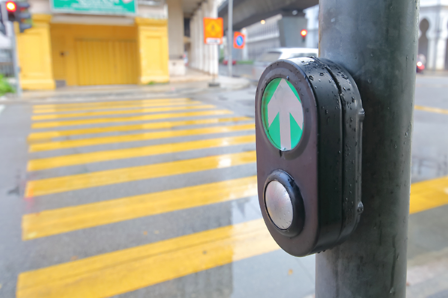
Urban transportation networks are quietly going through one of the biggest transformations in modern infrastructure history. Roads are no longer managed only by static signals and mechanical controls. Instead, cities are moving toward responsive environments where systems react intelligently to human presence and traffic behavior in real time.
Within this shift, pedestrian control systems have also started to evolve beyond traditional mechanical designs. One of the most important innovations in this category is the PedSense push button, a contact-free activation solution designed to make pedestrian crossings more efficient, safer, and more adaptive to real-world usage conditions.
Unlike conventional systems that depend on physical pressing, this technology introduces a sensing-based interaction model that removes direct contact while still ensuring accurate signal activation. The result is a more modern and reliable way for pedestrians to communicate with traffic systems.
Why Traditional Push Button Systems Are Becoming Outdated
For a long time, pedestrian crossings relied on simple mechanical buttons as the primary interaction point between humans and traffic signals. While this system worked effectively in earlier urban environments, it now struggles to meet the expectations of modern cities.
The main issue is wear and inconsistency. Mechanical components degrade over time due to constant usage, weather exposure, and physical stress. This leads to malfunctioning buttons, delayed response, or complete failure in busy intersections.
Another growing concern is hygiene. In high-density urban areas, thousands of people interact with the same surface daily, making it a potential point of contamination. This became even more important in recent years as public health awareness increased globally.
There is also the issue of accessibility. Traditional buttons are not always easy to use for everyone, especially elderly individuals, children, or people carrying items. These limitations have created a strong need for a more advanced solution.
See also: Common Mistakes to Avoid When Ordering DTF Transfer Sheets
The Working Concept Behind PedSense Push Button
The PedSense push button introduces a completely different interaction method compared to traditional systems. Instead of requiring physical pressure, it uses intelligent detection to sense when a pedestrian is nearby.
When a person enters the detection range, the system identifies presence through built-in sensing mechanisms and sends a request signal to the traffic controller. This ensures that pedestrian crossing requests are recorded without any physical contact.
What makes this system more effective is its confirmation response. Once activated, it provides clear visual indicators, usually through LED signals, and sometimes audio feedback to confirm that the request has been successfully registered.
This reduces confusion at intersections and improves user confidence in the system.
A Shift Toward Contact-Free Urban Interaction
Modern infrastructure design is increasingly focused on reducing physical touchpoints in public environments. This is not only about convenience but also about hygiene, durability, and operational efficiency.
The PedSense system fits naturally into this direction by removing the need for shared physical contact surfaces. This small change has a large impact on long-term maintenance and cleanliness in public traffic environments.
It also aligns with the broader concept of smart cities, where systems are designed to minimize manual interaction and maximize automated response.
Safety Improvements in Real Traffic Conditions
One of the most important roles of any pedestrian system is ensuring safety during road crossing. PedSense technology improves safety in multiple ways.
First, it ensures that activation signals are captured more reliably, reducing situations where pedestrians are unsure whether their request has been registered. Second, the feedback system provides clear confirmation, which reduces hesitation at crossings.
In busy intersections where traffic flow is continuous, this clarity plays an important role in preventing confusion and improving pedestrian confidence.
The PedSense push button therefore acts not just as a trigger system but as a communication bridge between pedestrians and traffic controllers.
Accessibility and User-Friendly Design Approach
Modern cities are built for diverse populations, and infrastructure must support all users equally. Traditional push buttons often require precise physical interaction, which can be challenging for some individuals.
PedSense technology solves this by removing the physical requirement altogether. Users only need to approach the device, and the system automatically detects their presence.
This makes it easier for elderly pedestrians, individuals with disabilities, and people carrying objects to interact with traffic systems without difficulty.
The design also ensures that feedback signals are clear and understandable, making the experience more intuitive for everyone.
Durability in Outdoor Environmental Conditions
Traffic infrastructure operates in some of the harshest environmental conditions. Devices are exposed to rain, dust, heat, pollution, and continuous public usage.
PedSense systems are designed with durable external housing and stable internal components to ensure consistent performance in these environments. This helps maintain long-term reliability even in high-traffic intersections.
Reduced mechanical wear also means fewer breakdowns and lower maintenance requirements over time, which is important for city management efficiency.
Integration with Smart Traffic Ecosystems
Modern traffic systems are no longer isolated components. They operate as part of a larger interconnected network that manages road flow dynamically.
The PedSense push button integrates smoothly into these smart systems by communicating directly with traffic signal controllers. This allows real-time processing of pedestrian requests without disrupting vehicle flow unnecessarily.
Such integration supports better synchronization between pedestrian movement and vehicle traffic, improving overall intersection efficiency.
Role in Smart City Development
As cities adopt smart infrastructure strategies, pedestrian interaction systems are becoming a key part of digital traffic ecosystems. These systems are no longer just mechanical tools but data-driven components of urban planning.
PedSense contributes to this evolution by supporting automation, reducing physical dependency, and improving system responsiveness.
Its design aligns with modern smart city goals, where efficiency, safety, and sustainability are central priorities.
Future Direction of Contactless Traffic Systems
The future of pedestrian crossing systems is expected to move toward even more advanced automation. Technologies like predictive sensing, AI-based traffic analysis, and adaptive signal timing are already being explored.
In such environments, contactless systems will become standard rather than optional. Pedestrian detection may eventually become fully automated, eliminating the need for any form of manual activation.
The PedSense system represents an early but important step in this direction, introducing contactless interaction into mainstream traffic infrastructure.
Conclusion
The PedSense push button represents a clear shift in how pedestrian control systems are designed and used in modern cities. By removing physical interaction and introducing intelligent sensing, it improves hygiene, accessibility, safety, and operational efficiency.
Its ability to integrate with smart traffic systems makes it a practical solution for modern urban environments that demand reliability and speed.
As infrastructure continues to evolve, contactless technologies like PedSense will play a key role in shaping safer and more intelligent transportation networks for the future.